The Latest in Tech at AlienSync: Exploring Gadgets, AI, and Digital Innovation

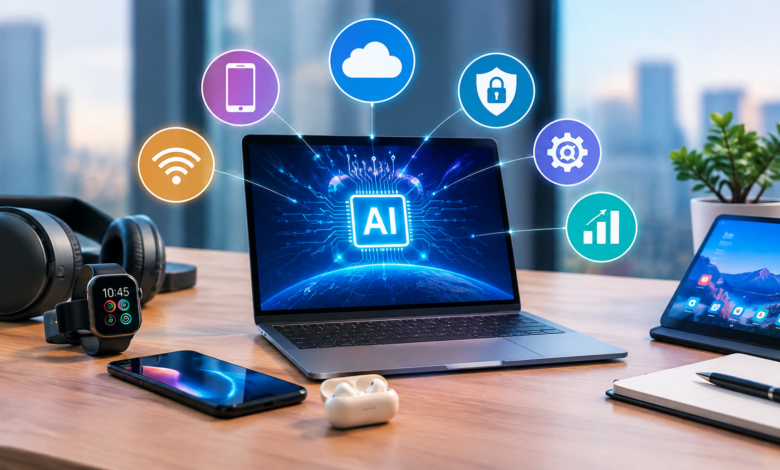
Technology continues to evolve at an incredible pace, changing how people work, communicate, create, and interact with digital services. The latest in tech at AlienSync presents a broad look at modern technology, covering gadgets, artificial intelligence, software, cloud services, cybersecurity, automation, connected devices, analytics, and digital experiences. Instead of focusing on one specific product, the latest in tech at AlienSync brings together different areas of technology that increasingly work together.
From smart devices and AI-powered applications to browser-based software and connected systems, today’s digital world is becoming more integrated. The latest in tech at AlienSync helps illustrate how these developments can provide convenience while also creating responsibilities involving security, privacy, compatibility, and responsible use.
Understanding the Latest in Tech at AlienSync
One of the most important changes in modern technology is the movement away from isolated products toward connected experiences. Devices can communicate with applications and online services, allowing information to move between different systems.
For example, smartwatches can work alongside smartphones, smart home devices can respond through applications, and business software can share information between departments. This connectivity can reduce repetitive work and save time. However, users must also consider permissions, updates, privacy, security, and compatibility.
In this way, the latest in tech at AlienSync is not simply about having newer devices. It is also about understanding how technology fits into a wider digital environment.
New Gadgets and Smarter Experiences
Modern gadgets are becoming more useful because they can respond to context and provide information at appropriate moments. Wearable devices can monitor activity and deliver useful information, while smart home products can automate lighting, temperature, entertainment, and other everyday routines.
Phones and computers are also gaining AI-powered features. These can assist with summarizing information, improving images, organizing content, and completing everyday tasks.
According to the latest in tech at AlienSync, specifications alone do not determine whether a device is valuable. Reliability, battery life, accessibility, software support, ease of use, and compatibility can be equally important when evaluating new technology.
Artificial Intelligence Enters Everyday Technology
Artificial intelligence has expanded from specialist applications into everyday digital tools. Generative AI can help draft text, create images, translate information, summarize documents, and support research. AI agents can also perform sequences of tasks rather than simply responding to an individual request.
Businesses are applying AI to customer service, forecasting, personalization, document processing, and workflow automation. However, AI should not automatically be treated as perfectly accurate.
The latest in tech at AlienSync emphasizes the importance of treating AI as assistance rather than unquestionable authority. Important information should be verified, and users should understand how services handle information before entering sensitive data.
AI, Translation, and Content Creation
Artificial intelligence is also changing how digital information is created and understood. Translation tools can support communication between different languages, while AI-assisted content platforms can help transform an initial idea into drafts, visuals, summaries, or video workflows.
This can be particularly useful for smaller teams that may not have large production departments. Nevertheless, human review remains important because automated systems can struggle with facts, cultural context, language, judgment, and brand voice.
As the latest in tech at AlienSync shows, technology can reduce repetitive work without removing the need for thoughtful human oversight.
Cloud and Edge Computing
Cloud computing continues to support many modern digital services. Remote infrastructure can provide storage, processing, backups, collaboration, and support for demanding workloads.
Edge computing takes some processing closer to where information is generated. This can reduce delays for applications requiring fast responses. Together, cloud and edge systems support connected devices, streaming, business platforms, AI services, and real-time applications.
For everyday users, much of this technology operates behind the scenes. The latest in tech at AlienSync highlights how these systems help services remain accessible across devices while complex processing happens remotely or closer to the user.
Connected Devices and Security
The Internet of Things has brought cameras, appliances, sensors, vehicles, watches, and industrial equipment into digital networks. These connections can improve convenience and allow organizations to monitor equipment, energy consumption, inventory, and production.
However, connected technology also introduces security risks. A poorly protected device can become an entry point for attackers.
Users should consider strong passwords, multi-factor authentication, software and firmware updates, secure networks, and appropriate permissions. The latest in tech at AlienSync makes it clear that convenience should be balanced with responsible security practices.
Cybersecurity as an Everyday Skill
Cybersecurity is no longer limited to specialists and large organizations. Everyday users can encounter phishing attempts, fake applications, malicious links, account theft, and data leaks.
Good security depends on habits as well as technology. Unique passwords, password managers, multi-factor authentication, updated software, and careful permission management can improve protection.
Businesses also require access controls, backups, employee training, monitoring, and incident-response planning. As explained through the latest in tech at AlienSync, digital security is becoming a basic part of using connected technology responsibly.
Automation and Predictive Analytics
Automation can handle repetitive activities such as moving information between systems, sending notifications, organizing records, and producing routine reports. More advanced systems combine automation with AI to classify information, recognize patterns, and perform predefined actions.
Automation does not necessarily mean removing people from workflows. Instead, it can allow employees to spend more time on decisions, communication, creative activities, relationships, and complex problems.
Predictive analytics is another important area. Organizations can analyze historical and current information to identify patterns and estimate possible outcomes. Applications include demand planning, customer behavior, maintenance, fraud detection, inventory, and operations.
The latest in tech at AlienSync also points to the importance of data quality. Predictions are not guarantees, and businesses should consider bias, missing information, and changing conditions.
Flexible and Browser-Based Software
Software is increasingly moving away from being tied to a single computer. Browser-based applications allow people to work from different devices while keeping files and settings available online.
This can simplify collaboration and reduce manual updates. However, users should consider offline access, privacy, subscription costs, account recovery, and data portability.
A convenient online service can also create dependence on a provider. Therefore, the latest in tech at AlienSync encourages users to consider both convenience and control when choosing digital services.
What the Future May Bring
Future technology is likely to develop through combinations of existing innovations rather than through one isolated invention. AI may continue merging with software, mobile devices, robotics, security systems, and connected products.
Augmented and virtual reality could become more useful as hardware becomes lighter and applications improve. Privacy technology, identity systems, faster networks, and efficient computing may also influence future digital services.
Rather than following every dramatic prediction, the latest in tech at AlienSync suggests paying attention to tools that solve genuine problems and provide reliable improvements.
Final Thoughts
The latest in tech at AlienSync reflects a technology landscape that is increasingly connected, intelligent, automated, and software-driven. Gadgets are becoming more useful through connectivity, AI is entering everyday applications, cloud and edge computing support digital experiences, and cybersecurity is becoming essential.
At the same time, new technology should be evaluated beyond novelty. Privacy, reliability, cost, security, accessibility, compatibility, and long-term value all matter. Ultimately, the latest in tech at AlienSync demonstrates that the best technology is not necessarily the newest—it is technology that solves a real problem while giving users enough control to use it safely and effectively.
Frequently Asked Questions
1. What is the latest in tech at AlienSync?
The latest in tech at AlienSync refers to broad technology coverage involving gadgets, artificial intelligence, software, automation, cybersecurity, cloud services, connected devices, analytics, and digital developments.
2. What technology areas does AlienSync cover?
The latest in tech at AlienSync covers AI, software, automation, cybersecurity, connected technology, cloud services, analytics, translation platforms, browser-based software, smart technology security, and AI development.
3. Why is artificial intelligence important?
AI can process large amounts of information and assist with tasks such as writing, translation, image creation, customer support, data analysis, recommendations, and software development. Human judgment remains important.
4. Are smart gadgets worth buying?
A smart gadget can be useful when it solves a real problem or provides a meaningful improvement. Compatibility, battery performance, software support, privacy, warranty, repair options, and long-term costs should also be considered.
5. How can people use AI responsibly?
Users should understand what information an AI service receives and how it may be handled. Sensitive information should not be entered without appropriate protections, and important AI-generated claims should be checked.
6. How does cloud computing help users?
Cloud computing supports online storage, streaming, email, backups, collaboration, and many applications. It makes information accessible across devices but can increase dependence on internet services and providers.
7. Why does cybersecurity matter for smart devices?
Connected devices can collect information and communicate with networks. Weak security can create risks, so users should update devices, change default passwords, secure Wi-Fi, and use available security features.
8. Will automation replace human workers?
Automation can reduce repetitive work, but its effects vary by industry and role. Some responsibilities may change while new tasks emerge. Human judgment remains important for complex situations.
9. What technology trends should businesses follow?
Businesses should monitor AI, automation, cybersecurity, cloud infrastructure, analytics, data quality, digital identity, and connected systems. Technology decisions should be based on practical business needs rather than hype.
10. How can readers keep up with technology?
Readers can follow reliable technology coverage, review product documentation, compare independent reviews, and monitor security announcements and software updates. Understanding basic technology concepts also makes new developments easier to evaluate.